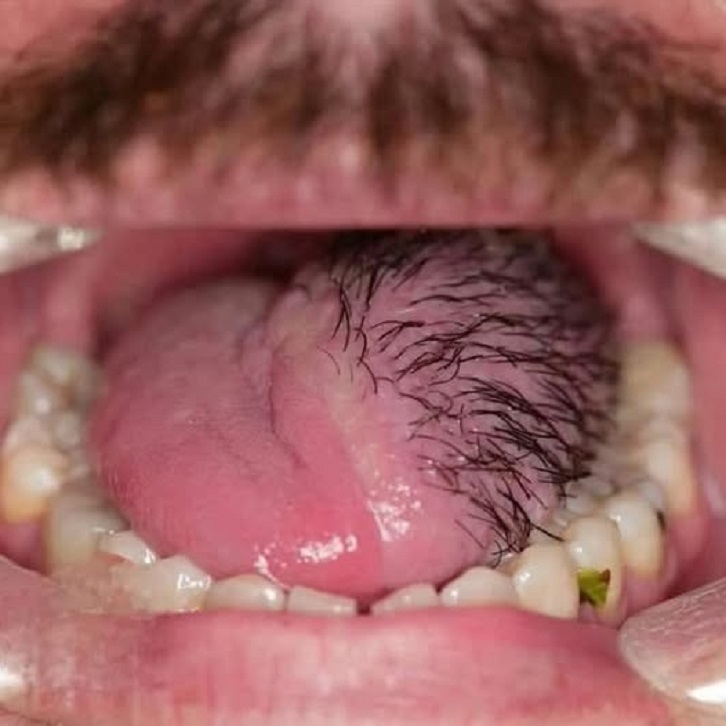
The fascinating and highly unusual medical video showcases a rare case of a hairy tongue condition or complex oral reconstruction graft where actual thick dark hair appears to be growing directly on a significant portion of a patient’s tongue surface. This striking visual presents a unique opportunity to explore advanced oral health concepts, surgical reconstruction side effects, and rare dermatological manifestations within the oral cavity for medical education. When viewed closely, the dark coarse hair covers almost half of the tongue’s dorsal surface, presenting a clear demarcation line between the affected hairy side and the normal pink mucosal tissue on the other side. Medical professionals and oral surgeons often analyze such extraordinary cases to understand the long-term outcomes of using radial forearm free flaps or scalp skin grafts during major reconstructive surgeries for oral cancer. When skin grafts containing active hair follicles are transplanted into the oral cavity to repair extensive tissue defects, the hair follicles can sometimes survive and continue to sprout hair inside the mouth due to the rich blood supply. This medical anomaly, while surprising to the general public, requires careful clinical management, specialized oral hygiene routines, and sometimes laser hair removal or surgical trimming to ensure the patient’s comfort and speaking ability. Maintaining excellent oral health is already a complex task, but when complicated by a condition like a hairy graft, patients must be exceptionally diligent to prevent food particles and bacteria from getting trapped in the hair strands. The video vividly captures the movement of the tongue, illustrating how the presence of coarse hair could potentially interfere with normal mastication, swallowing, and the clear articulation of speech sounds. Gastroenterologists, dentists, and dermatologists frequently collaborate on these rare cases to rule out other similar-looking conditions such as black hairy tongue, which is actually caused by the elongation and discoloration of filiform papillae rather than true hair growth. Black hairy tongue is typically associated with poor oral hygiene, heavy smoking, excessive coffee consumption, or the prolonged use of certain broad-spectrum antibiotics that disrupt the mouth’s natural microbial balance. In contrast, the true intraoral hair growth depicted in this specific footage strongly points toward a surgical history involving a skin flap harvest from a hair-bearing donor site on the patient’s body. Patients experiencing this rare phenomenon often undergo regular maintenance procedures where oral specialists carefully trim the hair or utilize specific cauterization techniques to suppress the active hair follicles permanently. The psychological impact of living with a highly visible and physically palpable oral anomaly cannot be understated, making compassionate patient care and effective therapeutic interventions absolutely essential. Through high-definition medical videography, researchers can better document the survival rates of different types of tissue grafts and develop improved protocols to select hairless donor sites for future surgeries. The surrounding dentition visible in the video also shows various dental restorations, highlighting the comprehensive oral rehabilitation that many of these patients must undergo over several years. Teaching hospitals and medical universities utilize these exact video clips to train the next generation of oral maxillofacial surgeons, ensuring they can identify, diagnose, and treat complex postoperative complications with confidence. Understanding the microenvironment of the human mouth helps scientists discover why certain grafted tissues adapt well to constant moisture while others maintain their original skin-like characteristics, such as growing hair. The distinct contrast between the dark hair and the bright pink tongue mucosa serves as a powerful teaching tool for differentiating between hereditary conditions, systemic diseases, and surgical complications. For search engine optimization and digital medical libraries, detailed descriptions of these rare cases help patients and medical students find reliable, fact-based information regarding uncommon oral pathologies. The continuous advancement in laser technology offers new hope for individuals dealing with intraoral hair, providing a non-invasive method to target and destroy the unwanted follicles safely within the mucosal lining. It is crucial for anyone noticing unusual changes in their tongue texture, color, or sensation to consult a qualified dentist or oral surgeon immediately for a comprehensive evaluation. By sharing these educational materials, the medical community can demystify rare conditions, reduce the social stigma associated with visible physical differences, and promote a broader understanding of human anatomy. Every unique medical case contributes valuable data to the global healthcare knowledge base, ultimately leading to refined surgical techniques, better patient counseling, and enhanced post-operative quality of life. The meticulous documentation of this patient’s oral condition underscores the beauty of modern medicine’s ability to reconstruct, adapt, and continuously learn from the endless complexities of the human body. As digital healthcare content expands, accurate and descriptive explanations of rare visual anomalies ensure that seeking knowledge remains a supportive, informative, and highly educational experience for everyone involved.