Analyzing the Catastrophic Overpass Collapse and Highway Emergency Response
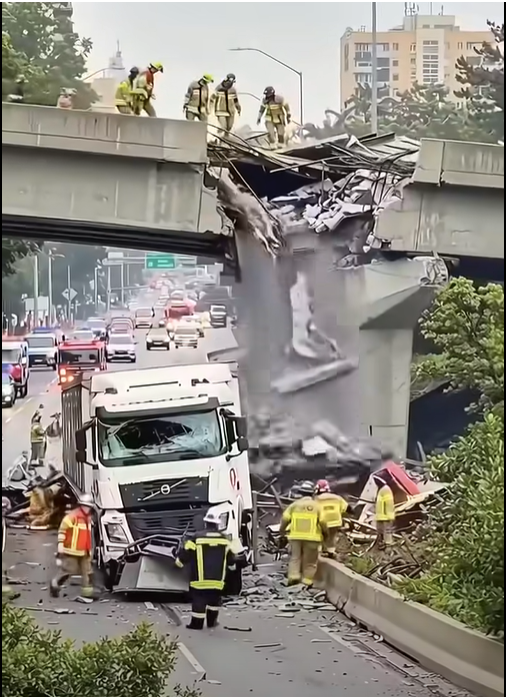
The frightening unpredictability of infrastructural failures is captured vividly in the provided video detailing a catastrophic highway overpass collapse. In the footage, an entire section of an elevated concrete bridge suddenly gives way, sending massive chunks of debris crashing down onto the active roadway below. A large white commercial semi-truck is stopped directly underneath the collapsed section, its front cab heavily damaged by the falling concrete structures. Firefighters and emergency first responders wearing bright yellow protective gear are already on the scene evaluating the severe wreckage. Several rescue workers are positioned on top of the broken overpass structure, peering down into the gap to assess the structural stability. Thick clouds of grey dust and smoke billow from the impact zone as traffic on the adjacent lanes comes to a complete standstill.
Suddenly, a secondary collapse occurs as another massive section of the concrete barrier breaks loose and plummets to the ground. The sudden shift in weight forces several firefighters standing on the upper deck to scramble backward or fall as the structure dissolves beneath them. One emergency responder is seen sliding dramatically down the collapsing debris pile, narrowly escaping being crushed by the falling masonry. Below, the rescue workers on the ground must instantly turn and flee to avoid the fresh wave of tumbling concrete slabs. The sheer force of the impact sends a violent shockwave of dust and debris directly toward the camera, obscuring the entire scene in seconds. Screams of shock from onlookers echo through the audio as the physical environment changes completely in the blink of an eye.
This terrifying event highlights the immense danger that first responders face when operating around unstable, compromised civil infrastructure. When an overpass suffers a primary structural failure, the surrounding sections are subjected to extreme, unintended physical stress distribution. Engineers note that secondary collapses are a constant threat during search and rescue operations due to weakened structural supports. This specific scenario requires meticulous safety protocols, including real-time monitoring of structural shifting before crews enter a hot zone. For digital content creators focusing on engineering and public safety, using highly optimized SEO terms like “bridge collapse,” “highway disaster response,” and “structural engineering failure” is essential. Providing a detailed, sentence-by-sentence analysis of the footage helps viewers understand the chaotic reality of civil emergencies.
The socioeconomic impact of a major highway overpass failure is incredibly disruptive to urban transportation networks and local supply chains. Commuters face massive delays as critical transit arteries are shut down indefinitely for emergency clearing and forensic investigation. Municipalities must invest millions of dollars to clear the thousands of tons of ruined concrete and eventually rebuild the passage. The incident also prompts immediate widespread safety audits of similar bridge structures across the entire regional transit network. Investigating the root cause—whether due to structural aging, material fatigue, or an overheight vehicle impact—is paramount to preventing future tragedies.
Modern emergency response strategies heavily emphasize the use of advanced technology to mitigate risks during these unstable rescue operations. Drones equipped with LiDAR and thermal imaging are often deployed to map structural cracks without putting human lives at risk. Acoustic sensors can detect microscopic shifts and vibrations within the concrete, providing early warning signs of an impending secondary collapse. Training first responders to quickly adapt to rapidly deteriorating environmental conditions is a core pillar of modern disaster management. The dramatic footage serves as a stark reminder of why rigid infrastructure inspection laws and timely maintenance schedules are absolutely non-negotiable. Ultimately, fostering public awareness regarding structural safety and supporting robust infrastructure spending ensures safer highways and more resilient cities for everyone.