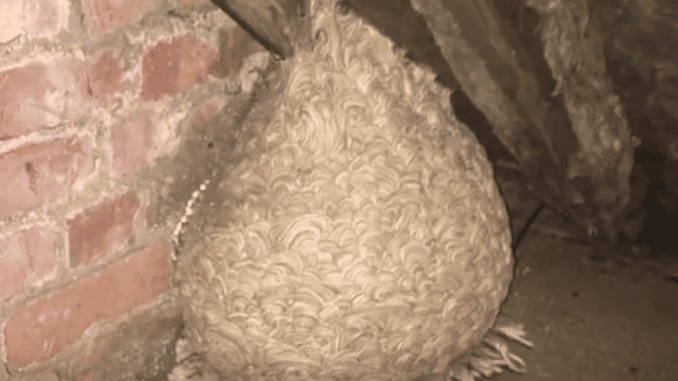
The detailed video clip shows a massive, fully constructed wasp nest tucked safely under the roof beams inside an old, dimly lit attic. Tucked against exposed brick walls and wooden rafters, the impressive paper structure hangs in a classic teardrop shape with intricate layered patterns. Upon closer inspection, the entire lower rim of the nest reveals thousands of living wasp larvae actively squirming and wiggling in their open comb cells. The sudden motion created by the synchronized movement of the larvae gives the bottom edge of the nest a strange, undulating fringe. Built meticulously from chewed wood pulp mixed with saliva, the paper nest showcases natural architecture at its most complex. The attic space appears dusty and old, filled with yellowing fiberglass insulation and weathered red bricks that frame the huge colony structure. The dark, sheltered environment provides ideal conditions for a flourishing stinging insect population to grow uninterrupted. Homeowners discovering such a large active nest face significant safety hazards, as aggressive adult wasps defend their home vigorously when disturbed. The sheer scale of the nest indicates that the colony has been thriving and expanding over many months without human intervention. Thousands of individual cell chambers line the inner architecture, housing developing eggs, growing larvae, and pupating insects. The strange visual phenomenon of hundreds of writhing larvae emerging along the bottom perimeter creates a striking, almost hypnotic texture. Pest control professionals often highlight attic wasp infestations as one of the most challenging structural removal scenarios. In closed spaces like attics, trapped air and cramped conditions make unassisted pest removal extremely dangerous for untrained individuals. The papery material forming the outer shell acts as an effective insulator, protecting the internal brood from extreme temperature fluctuations. Bright flashlights or inspection lamps illuminate the intricate brown and beige swirled textures across the outer envelope of the nest. As the larvae move in unison, they create subtle vibrations and audible rustling sounds within the enclosed attic space. The presence of exposed fiberglass insulation nearby suggests that the insects easily found plenty of secluded crevices to initiate nest building. Structural timber rafters support the immense weight of the nest, which can weigh several pounds when fully populated with active larvae and adults. Adult wasps continuously harvest wood fiber from nearby outdoor sources like fences, decks, and tree bark to expand the hive size. The delicate yet sturdy paper walls consist of paper-thin layers that trap air to maintain stable thermal conditions for the vulnerable larvae inside. Discovering a nest of this magnitude usually indicates a well-established queen that successfully overwintered and began egg laying in early spring. The squirming motion of the exposed larvae along the bottom rim serves as a stark reminder of the massive biological activity occurring inside the structure. Professional exterminators utilize specialized protective suits, long-reach applicators, and industrial insecticides to treat and safely remove large attic nests. Attempting to destroy a giant wasp nest without proper equipment can result in severe allergic reactions and dozens of painful stings. The natural engineering displayed in wasp nest construction continues to inspire biological researchers and structural design experts worldwide. Exposed brickwork adjacent to the nest provides a rough, textured surface that helps the paper paste anchor securely to the building walls. Dark, unventilated attic spaces offer complete protection from heavy rain, strong winds, and natural predators like birds or squirrels. The pale, worm-like larvae wiggle continuously in their open paper cells, waiting for adult worker wasps to bring them chewed insect food. As the colony grows throughout the summer season, hundreds of new workers emerge daily to take on foraging and nest maintenance duties. Property owners must routinely inspect hidden residential spaces like attics, sheds, and crawlspaces to catch early nest construction before it reaches massive proportions. The intricate swirled patterns on the exterior wall of the nest result from different wood sources harvested by foraging workers over time. A single large wasp nest can harbor several thousand active insects at the peak of late summer and early autumn. The unusual visual appearance of larvae wiggling together along the bottom fringe makes this video footage particularly fascinating and unsettling to viewers. Specialized pest management companies emphasize the importance of sealing small roof gaps, fascia openings, and soffit vents to prevent queen wasps from entering home attics. The video captures a rare, clear close-up view of active brood development that normally remains hidden deep inside sealed hive walls. Each individual cell within the paper comb acts as an ideal nursery, tailored specifically to hold a single growing larva through its development stages. The structural integrity of the paper nest relies on precise honeycomb geometry that maximizes space while maintaining high structural strength. Environmental factors like warmth and shelter inside residential roofs significantly accelerate the growth rate of social wasp colonies. Emergency pest removal becomes an urgent safety priority when giant nests develop close to active living spaces, bedrooms, or attic access hatches. The visual contrast between the static, rough brick wall and the dynamic, living movement of the lower nest edge is captivating. Expert exterminators recommend waiting until late evening or early morning to treat active nests, as most foraging adults return to the hive at night. Protective gear, including heavy-duty gloves and thick bee suits, is mandatory when handling large infestations in enclosed building spaces. The immense size of this specific attic nest demonstrates how quickly a tiny queen can build a massive, thriving insect metropolis. The delicate paper material breaks down easily when treated with professional liquid insecticides or aerosol dust formulations. Observing wasp behavior in dark attic spaces provides valuable insights into how urban environments offer ideal shelter for wild pest populations. The incredible footage serves as an educational example of advanced insect architecture and the surprising reality of hidden home infestations. Prompt identification and professional removal of large wasp nests protect families from hazardous stings and prevent further structural damage to attic insulation.